Film and immersive
Sorella's Story and To Never Forget
A 360° docudrama and companion feature documentary exploring the Latvian Holocaust.
- Venice Immersive, in competition, 2022
- AACTA nomination, Best Documentary, 2024
- Permanent home at the Queensland Holocaust Museum
- Role
- Associate Producer and Immersive Technology Consultant
- With
- Soul Vision Films
- When
- 2019 to 2022
- Practice
- Film and video, Interaction design
Project
Sorella's Story and To Never Forget
Sorella's Story and To Never Forget are two interconnected film projects exploring the Latvian Holocaust, on which I served as Associate Producer and Immersive Technology Lead.
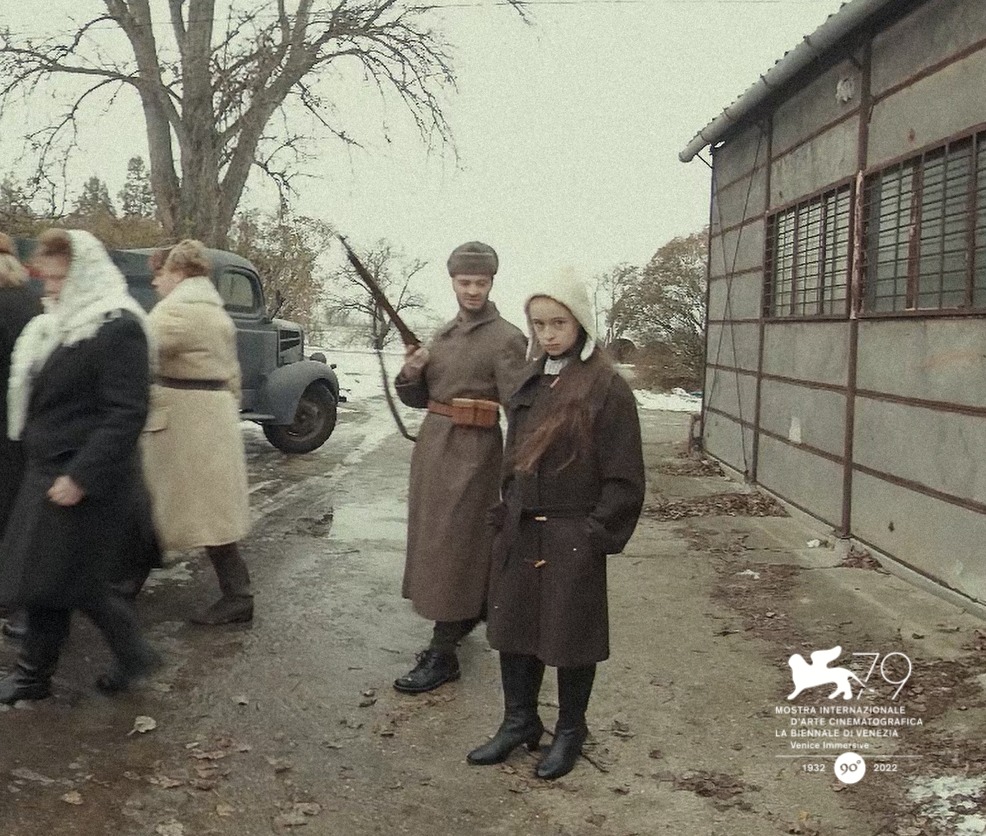
Sorella's Story is a 360° immersive docudrama designed for viewing on virtual reality headsets. It brings to life a smuggled 1941 photograph depicting the final moments of a group of Latvian Jewish women and children, including 11-year-old Sorella Epstein, on the beaches of Liepāja, Latvia.
To Never Forget is a companion feature documentary that tells the broader story of the Latvian Holocaust, intertwined with the director's personal journey to bring the immersive film to life. Together, the projects represent a groundbreaking approach to Holocaust education and remembrance, using innovative storytelling and emerging technology to emotionally connect audiences across cultures and generations.
Both projects were directed by Peter Hegedüs and produced by Soul Vision Films, with principal production funding from Screen Australia in association with Screen Queensland, Griffith University's Disrupting Violence Beacon, and Dalarna University, Sweden.
My role: Associate Producer and Immersive Technology Consultant
On Sorella's Story, I served as both Associate Producer and Immersive Technology Consultant, contributing across the full production cycle. My responsibilities spanned creative, technical, and logistical domains. I researched and implemented technical solutions for immersive staging and 360° visual storytelling, including consulting on set in Hungary to ensure appropriate staging within the unique constraints and opportunities of 360° filmmaking. In postproduction, I stitched and edited the immersive footage, a technically demanding process that required precision and a deep understanding of how audiences experience spatial narrative.
I also conducted filmed interviews with historians and subject matter experts, contributing to both Sorella's Story and the broader documentary material that formed the basis of To Never Forget. Managing international stakeholders across Australia, Latvia, and Hungary was a significant aspect of the role, requiring clear communication across cultural and geographical boundaries while navigating highly sensitive subject matter with care and a trauma-informed approach.
Outcome
Technical innovation
Sorella's Story represents a bold application of immersive technology to historical storytelling and education. The film uses 360° filmmaking techniques to place the viewer directly in the snowy landscape of 1941 Latvia alongside Sorella and the women in their final moments. Viewed through a VR headset, the experience is designed to create a profound emotional connection that goes beyond what traditional documentary forms can achieve. My work on the project deepened my expertise in immersive technology, 360° production workflows, spatial storytelling, and the ethical considerations of using emerging technologies to represent sensitive and traumatic historical events.
Recognition and impact
Sorella's Story premiered in competition at the Venice International Film Festival in 2022 as part of the Venice Immersive strand. It has since been exhibited worldwide at festivals and has a permanent home at the Queensland Holocaust Museum, where it continues to serve as a powerful educational resource. The film is also used in schools across Australia for Holocaust education, extending its impact well beyond the festival circuit into meaningful, lasting community use.
To Never Forget was nominated for the 2024 AACTA Award for Best Documentary, recognising the film as one of the most compelling feature-length non-fiction productions by Australian filmmakers that year.
Personal reflection
Working on these projects was a formative professional and personal experience. The opportunity to contribute to a suite of works that use innovative, creative, and technical approaches to ensure the stories of Holocaust victims are preserved and shared with new audiences is something I carry with me deeply. The project required navigating the intersection of creative storytelling, technical innovation, and profound ethical responsibility, an intersection that continues to define the kind of work I am most passionate about. It reinforced my belief that emerging technologies, when applied thoughtfully and with genuine human need at the centre, can create experiences that educate, connect, and transform.